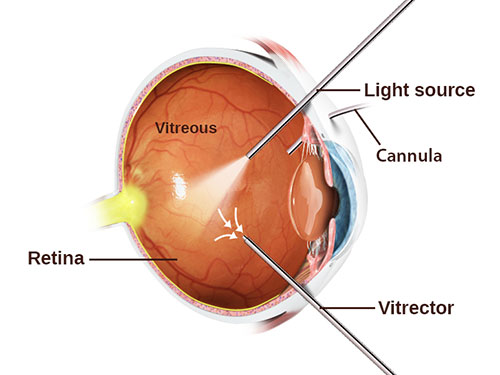
Retina
Intraocular Injections
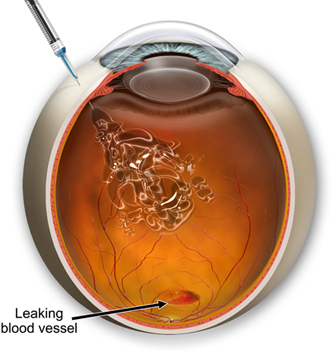
Many diseases of the retina can be treated by injecting small amounts of medicine into the eye. Some retinal diseases typically treated with intraocular injections include wet macular degeneration and swelling of the retina (macular edema) from diabetic eye disease or retinal “strokes.”
The injection is performed in the white part of the eye (sclera) with a tiny needle. The eye is thoroughly anesthetized before the injection to make it painless.
Laser Treatment
Retina specialists perform many different types of laser treatments. Laser treatments performed by retina specialists are different than LASIK, which many people have heard about or have undergone themselves.
Retinal laser procedures are directed toward the back of the eye (the retina) and are designed to treat diseases of the retina. LASIK and other similar procedures are performed on the front of the eye (the cornea) and are designed to eliminate the need for glasses.
Laser procedures on the retina are used to treat retinal tears, decrease retinal swelling, and prevent or shrink the growth of abnormal blood vessels in the eye that can cause vision loss. Laser procedures are performed in the clinic and are associated with minimal patient discomfort.
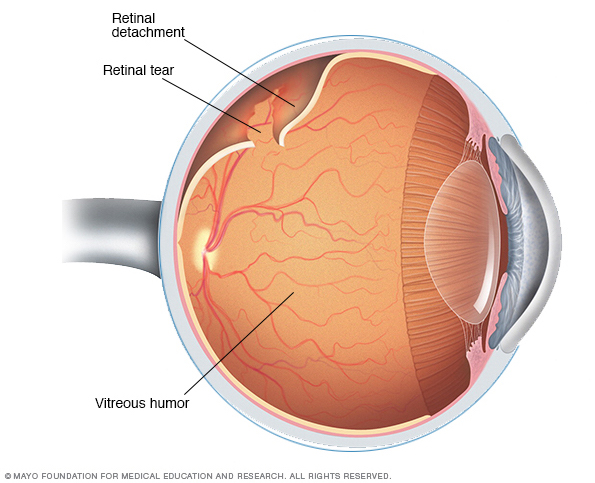
Retinal Detachment Surgery
Most retinal detachments are emergencies that require surgical repair by a retinal specialist. Retinal detachments are usually caused by a tear or hole in the retina, which allows fluid to collect under the retina, separating it from the back wall of the eye. Retinal detachments can result in partial or total loss of vision. Retinal detachment surgery aims to remove the fluid under the retina and secure the retina at the site of the retinal tear or hole to prevent more fluid from re-accumulating under the retina. Surgeries to reattach the retina include “Vitrectomy” and “Scleral Buckling.”
Vitrectomy
“Vitrectomy” is a surgical procedure performed by a retina specialist to remove the vitreous in the eye and treat diseases of the retina. Vitrectomy is commonly performed to treat retinal detachments, severe bleeding in the eye, macular holes, and macular puckers.
Vitrectomy involves placing small instruments into the eye. For most patients, vitrectomy can be formed under local or “twilight” anesthesia, where the patient is sedated, and the eye is completely anesthetized to eliminate any pain or discomfort. A vitrectomy is usually an outpatient procedure.
All of our retina specialize in “small-incision” vitrectomy, where the surgical instruments used are tiny and do not require stitches. Minor incision surgery has the added benefit of shorter surgery times and quicker recovery following surgery.